
Uthingo Environmental Services
Sewage Plants
The Uthingo Sewage Systems are unique in both design and application, offering the ultimate and natural choice for efficient waste management. These systems are self-operating and require no sludge removal, making them a hassle-free and environmentally friendly solution.
Uthingo Environmental Services
Sewage Plants
The Uthingo Sewage Systems are unique in both design and application, offering the ultimate and natural choice for efficient waste management.
These systems are self-operating and require no sludge removal, making them a hassle-free and environmentally friendly solution.
These systems are self-operating and require no sludge removal, making them a hassle-free and environmentally friendly solution.
Uthingo 1 ML Sewage System Overview
The Uthingo 1 ML Sewage System is designed with two channels, each capable of treating 500 KL of flow per day. Each channel functions as a fully independent sewage system, ensuring uninterrupted operation. If one channel develops an issue, the flow can be redirected to the other, allowing maintenance to take place without disrupting service. The system’s effluent discharge experiences only slight degradation over a 24-hour period. Disinfection is achieved using self-developing ozone units that operate continuously, with a 15-minute retention time to ensure effective treatment. By reducing the amount of mechanical equipment, the system maintains acceptable running costs while still meeting performance requirements. Installation of a 1 ML system requires an area of 2,000 m².
All designs follow the Guidelines for Package Sewage Systems for South Africa by D.J. Nozaic (2009), ensuring compliance with established industry standards.
I have been involved in the field of water and sanitation for more than forty years, during which I have come across many alternative solutions. Over time, engineers and scientists have continuously sought systems and processes that are more appropriate, cost-effective, and environmentally sustainable.
One of the greatest challenges faced by municipalities remains the lack of skills, inadequate maintenance, and the absence of regular and timely servicing of plant equipment at sewage works.
About ten years ago, I was introduced to the Uthingo wastewater process. Like many others, I was initially sceptical—after all, many solutions have been proposed over the years, with varying degrees of success. However, I decided to invest time in investigating the Uthingo process. My first impression was that it seemed too simple. I asked myself: why had no one else thought of this before? The answer, I believe, lies in the fact that we often try to make things unnecessarily complicated.
From small-scale plants to large wastewater facilities—including package plants—the Uthingo system consistently outperforms the rest. It is more environmentally friendly, cheaper to operate, and easier to maintain. It requires fewer staff, less technical expertise, and delivers effluent quality that, when measured over time, surpasses most other systems. I say “most” because there may, of course, be an exceptional plant somewhere that achieves comparable results.
Based on my experience, I can confidently recommend a serious consideration of the Uthingo process. It represents appropriate technology that is both practical and highly suitable for the projects many companies are engaged in today.
Should you have any queries regarding my article on the Uthingo process, please feel free to contact me.
Yours faithfully,
J. van der Walt (Pr. Tech. Eng., MBA, PhD)
info@thesycaminetree.co.za
One of the greatest challenges faced by municipalities remains the lack of skills, inadequate maintenance, and the absence of regular and timely servicing of plant equipment at sewage works.
About ten years ago, I was introduced to the Uthingo wastewater process. Like many others, I was initially sceptical—after all, many solutions have been proposed over the years, with varying degrees of success. However, I decided to invest time in investigating the Uthingo process. My first impression was that it seemed too simple. I asked myself: why had no one else thought of this before? The answer, I believe, lies in the fact that we often try to make things unnecessarily complicated.
From small-scale plants to large wastewater facilities—including package plants—the Uthingo system consistently outperforms the rest. It is more environmentally friendly, cheaper to operate, and easier to maintain. It requires fewer staff, less technical expertise, and delivers effluent quality that, when measured over time, surpasses most other systems. I say “most” because there may, of course, be an exceptional plant somewhere that achieves comparable results.
Based on my experience, I can confidently recommend a serious consideration of the Uthingo process. It represents appropriate technology that is both practical and highly suitable for the projects many companies are engaged in today.
Should you have any queries regarding my article on the Uthingo process, please feel free to contact me.
Yours faithfully,
J. van der Walt (Pr. Tech. Eng., MBA, PhD)
info@thesycaminetree.co.za
What Makes the WWTP Unique
- Designed to fit seamlessly with client requirements.
- Can be installed as close as 100m from residential houses.
- The plant can be buried, with only manholes visible.
- Landscaping (grass, shrubs, etc.) can be planted above the plant.
- Operates autonomously with minimal supervision.
- Has the ability to rectify final water quality without external assistance.
- Can be constructed in phases to match development stages.
- Final effluent may be safely discharged into stormwater drains.
- Additional channels can be added to the system if required.
- Odour-free operation.
- Eliminates the need for honey suckers or drying beds.
- Can, in some cases, replace conventional pump stations.
- Adaptable design allows for flexible tank arrangements.
- Multiple plants can be built in phases, depending on site contours.
- Easier approval process for obtaining a water licence.
- Can be operated by locally employed, unskilled labour.
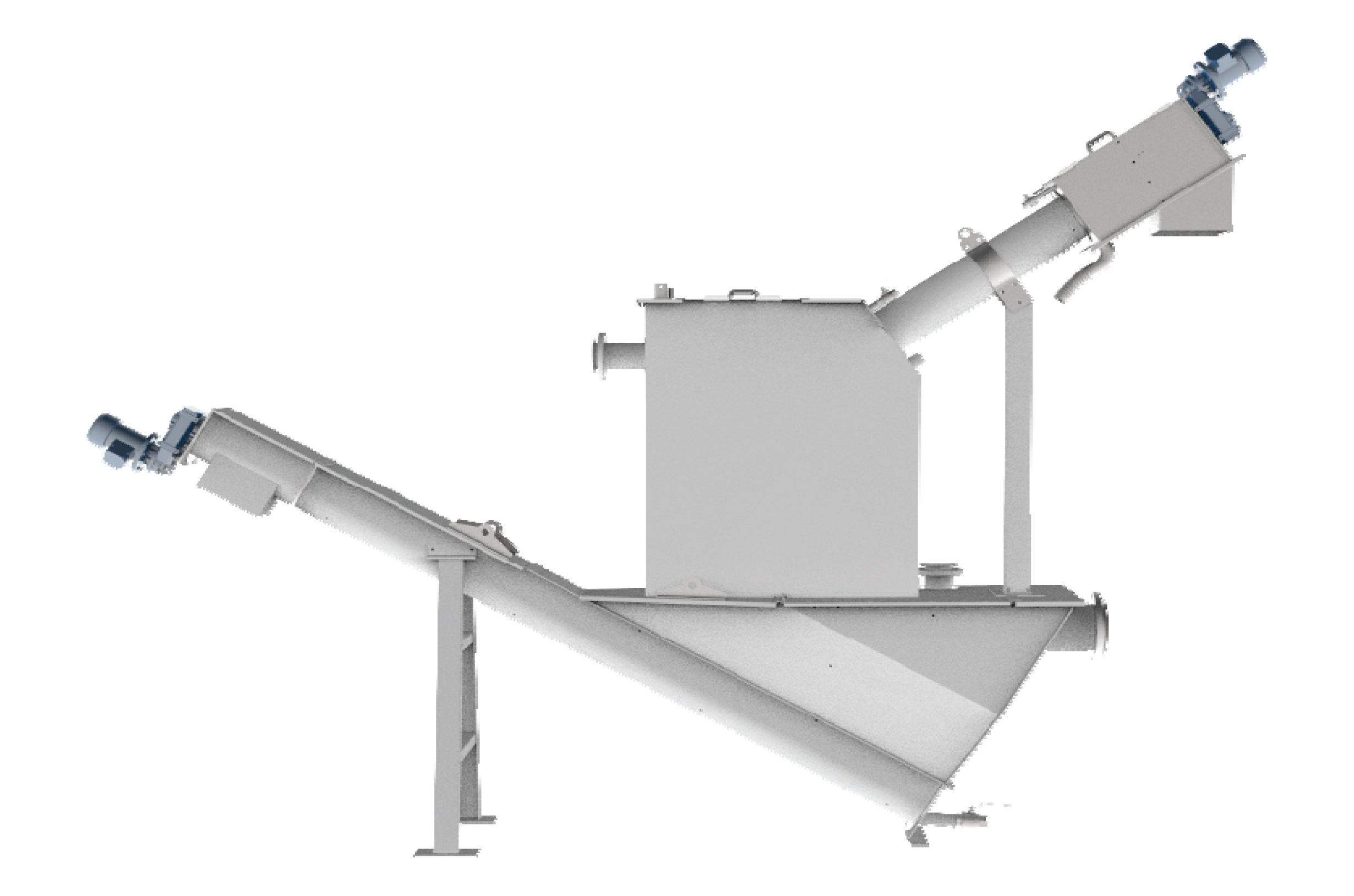
- Simple daily maintenance: clean the screen and check operation (±30 min).
- Uses readily available mechanical equipment (air blowers and RAB pumps).
- Requires greatly reduced electrical supply, minimizing failure risks.
- Mechanical components need no major servicing for about 5 years (bearings only).
- Safe for children and animals.
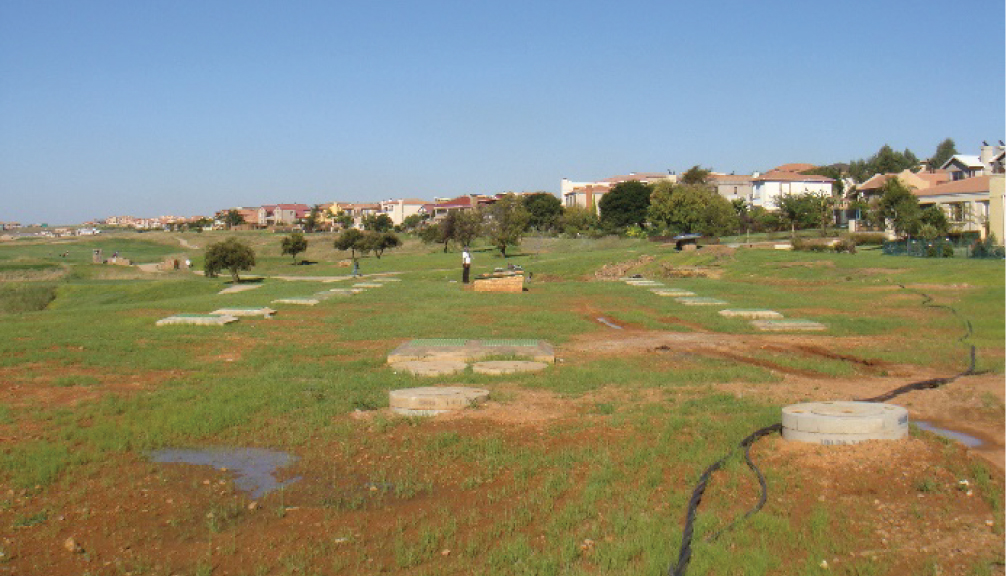
The 500 kl plant is located 80 m
away from the houses.
away from the houses.
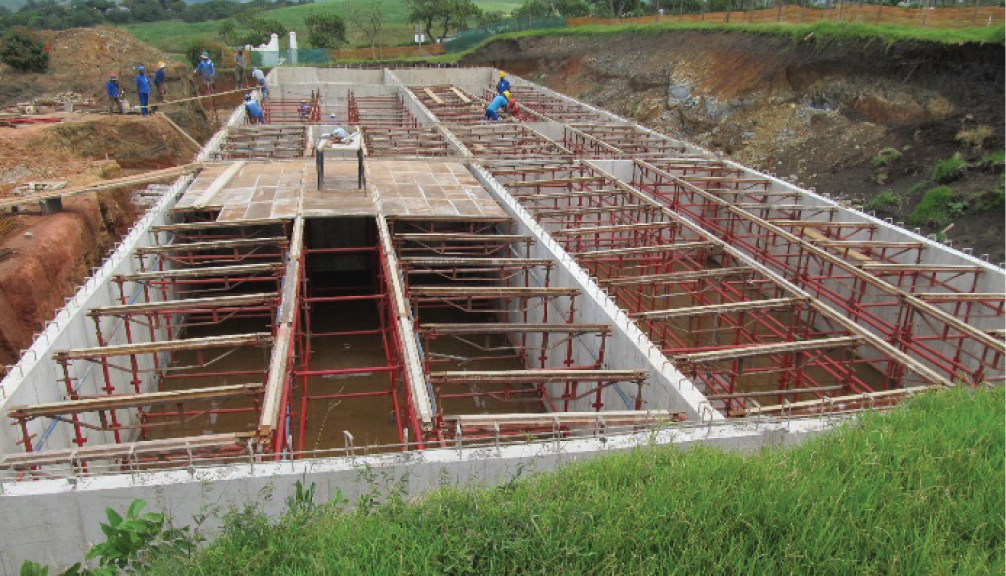

The 240 kl plant, once completed, will serve the houses across the road.
Uthingo can achieve this due to the unique design of its plants.
Uthingo can achieve this due to the unique design of its plants.
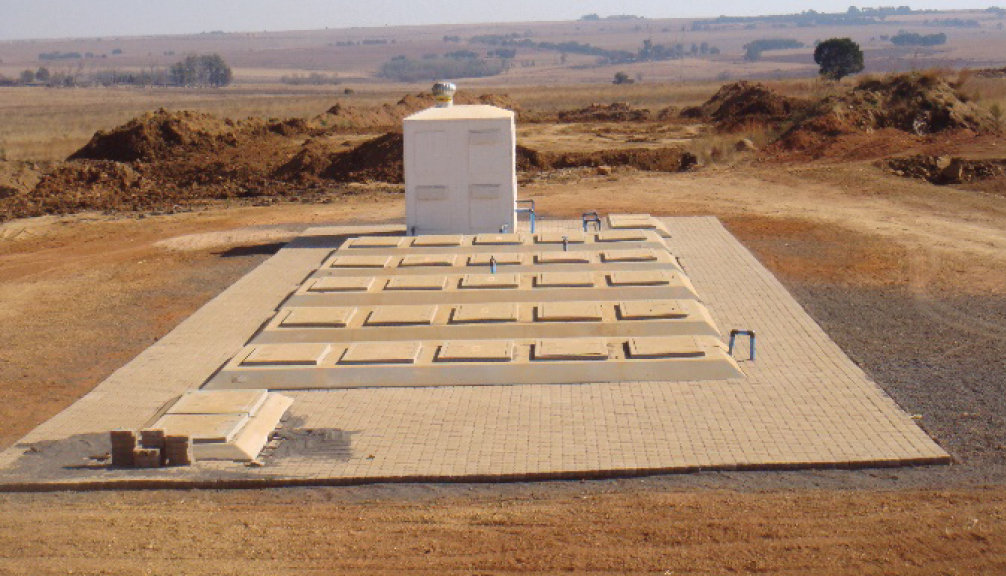
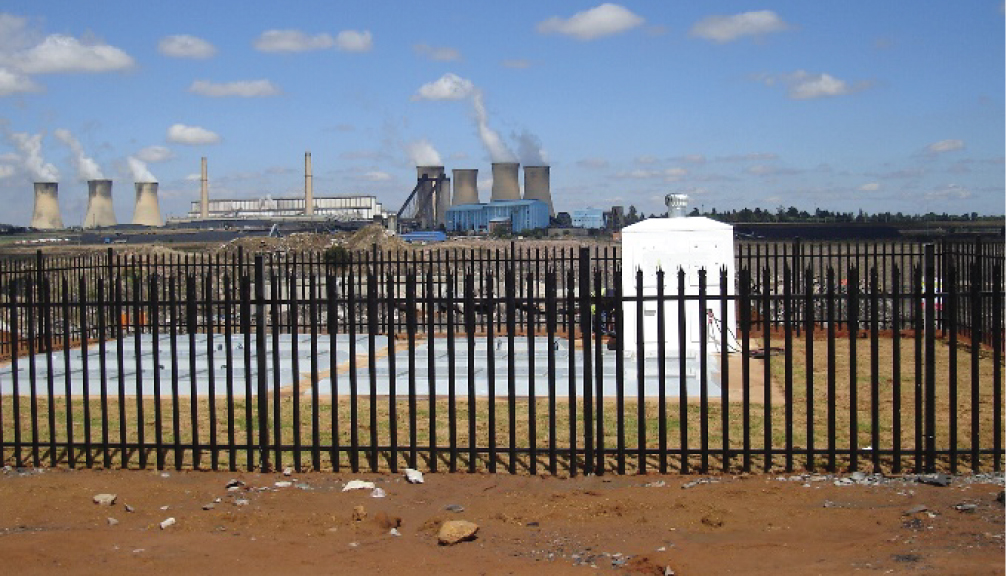
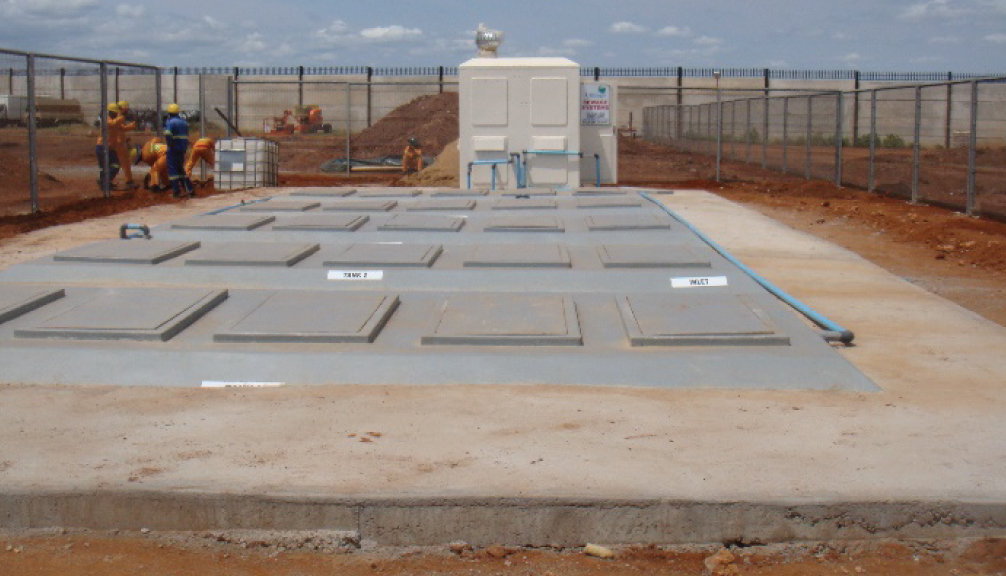
Our fiberglass sewage systems are designed for use with flows of up to 100 kl per day.
Real World Documented Results
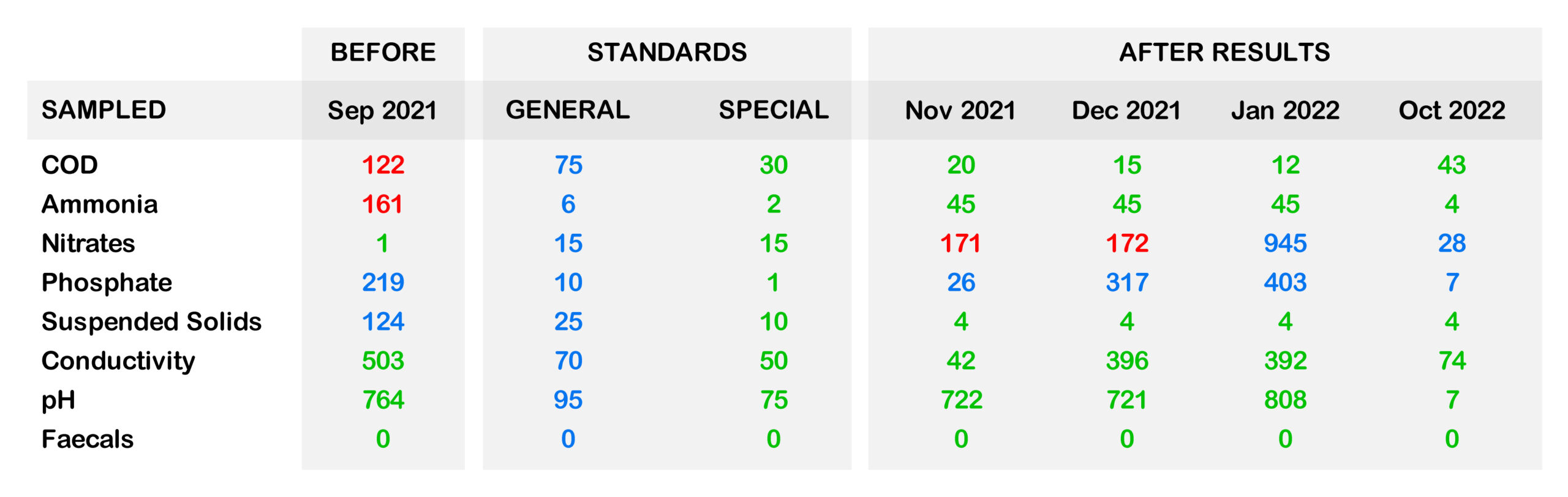
Note: The plant has been operational for eight years, and throughout this period, no sludge build-up has been observed. This indicates that the system has been functioning efficiently, and the biological processes within the plant are maintaining effective operation over the long term.
Uthingo 1 ML Sewage System Overview
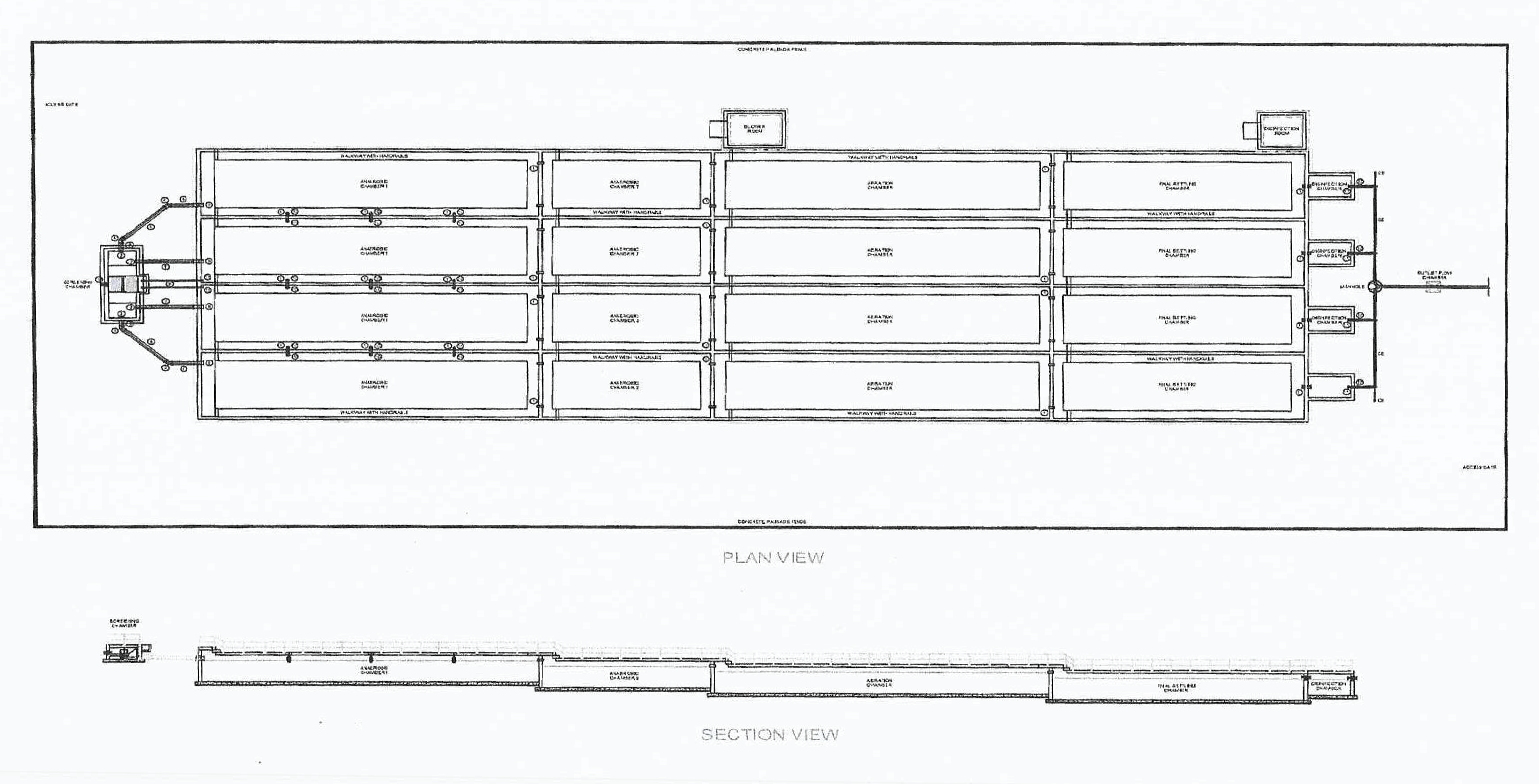
The Uthingo 1 ML Sewage System is designed with two channels, each capable of treating 500 KL of flow per day. Each channel functions as a fully independent sewage system, ensuring uninterrupted operation. If one channel develops an issue, the flow can be redirected to the other, allowing maintenance to take place without disrupting service. The system’s effluent discharge experiences only slight degradation over a 24-hour period. Disinfection is achieved using self-developing ozone units that operate continuously, with a 15-minute retention time to ensure effective treatment. By reducing the amount of mechanical equipment, the system maintains acceptable running costs while still meeting performance requirements. Installation of a 1 ML system requires an area of 2,000 m².
All designs follow the Guidelines for Package Sewage Systems for South Africa by D.J. Nozaic (2009), ensuring compliance with established industry standards.
I have been involved in the field of water and sanitation for more than forty years, during which I have come across many alternative solutions. Over time, engineers and scientists have continuously sought systems and processes that are more appropriate, cost-effective, and environmentally sustainable.
One of the greatest challenges faced by municipalities remains the lack of skills, inadequate maintenance, and the absence of regular and timely servicing of plant equipment at sewage works.
About ten years ago, I was introduced to the Uthingo wastewater process. Like many others, I was initially sceptical—after all, many solutions have been proposed over the years, with varying degrees of success. However, I decided to invest time in investigating the Uthingo process. My first impression was that it seemed too simple. I asked myself: why had no one else thought of this before? The answer, I believe, lies in the fact that we often try to make things unnecessarily complicated.
From small-scale plants to large wastewater facilities—including package plants—the Uthingo system consistently outperforms the rest. It is more environmentally friendly, cheaper to operate, and easier to maintain. It requires fewer staff, less technical expertise, and delivers effluent quality that, when measured over time, surpasses most other systems. I say “most” because there may, of course, be an exceptional plant somewhere that achieves comparable results.
Based on my experience, I can confidently recommend a serious consideration of the Uthingo process. It represents appropriate technology that is both practical and highly suitable for the projects many companies are engaged in today.
Should you have any queries regarding my article on the Uthingo process, please feel free to contact me.
Yours faithfully,
J. van der Walt (Pr. Tech. Eng., MBA, PhD)
info@thesycaminetree.co.za
One of the greatest challenges faced by municipalities remains the lack of skills, inadequate maintenance, and the absence of regular and timely servicing of plant equipment at sewage works.
About ten years ago, I was introduced to the Uthingo wastewater process. Like many others, I was initially sceptical—after all, many solutions have been proposed over the years, with varying degrees of success. However, I decided to invest time in investigating the Uthingo process. My first impression was that it seemed too simple. I asked myself: why had no one else thought of this before? The answer, I believe, lies in the fact that we often try to make things unnecessarily complicated.
From small-scale plants to large wastewater facilities—including package plants—the Uthingo system consistently outperforms the rest. It is more environmentally friendly, cheaper to operate, and easier to maintain. It requires fewer staff, less technical expertise, and delivers effluent quality that, when measured over time, surpasses most other systems. I say “most” because there may, of course, be an exceptional plant somewhere that achieves comparable results.
Based on my experience, I can confidently recommend a serious consideration of the Uthingo process. It represents appropriate technology that is both practical and highly suitable for the projects many companies are engaged in today.
Should you have any queries regarding my article on the Uthingo process, please feel free to contact me.
Yours faithfully,
J. van der Walt (Pr. Tech. Eng., MBA, PhD)
info@thesycaminetree.co.za
What Makes the WWTP Unique
- Designed to fit seamlessly with client requirements.
- Can be installed as close as 100m from residential houses.
- The plant can be buried, with only manholes visible.
- Landscaping (grass, shrubs, etc.) can be planted above the plant.
- Operates autonomously with minimal supervision.
- Has the ability to rectify final water quality without external assistance.
- Can be constructed in phases to match development stages.
- Final effluent may be safely discharged into stormwater drains.
- Additional channels can be added to the system if required.
- Odour-free operation.
- Eliminates the need for honey suckers or drying beds.
- Can, in some cases, replace conventional pump stations.
- Adaptable design allows for flexible tank arrangements.
- Multiple plants can be built in phases, depending on site contours.
- Easier approval process for obtaining a water licence.
- Can be operated by locally employed, unskilled labour.
- Simple daily maintenance: clean the screen and check operation (±30 min).
- Uses readily available mechanical equipment (air blowers and RAB pumps).
- Requires greatly reduced electrical supply, minimizing failure risks.
- Mechanical components need no major servicing for about 5 years (bearings only).
- Safe for children and animals.
The 500 kl plant is located 80 m
away from the houses.
away from the houses.
The 240 kl plant, once completed, will serve the houses across the road. Uthingo can achieve this due to the unique design of its plants.
Our fiberglass sewage systems are designed for use with flows of up to 100 kl per day.
Real World Documented Results
Note: The plant has been operational for eight years, and throughout this period, no sludge build-up has been observed. This indicates that the system has been functioning efficiently, and the biological processes within the plant are maintaining effective operation over the long term.
Testimonial
The following letter was received from a golfing estate. It addresses issues arising from the excessive load-shedding experienced, which has caused problems at the Uthingo sewage plant. The letter also clarifies the question raised regarding the lack of sludge operation.
It was discussed at the last meeting to finally improve the operation of the standby generator. However, over the weekend, an electricity failure occurred, and the plant was off for about 19 hours. This resulted in an untreated flow of 350 kl passing through the plant. It takes the biological operation at least two days to recover from such an event.
The soap level in the aeration chamber was relatively high, which in turn appeared at the outlet of the plant. Over the last three weeks, a significant improvement has been noticed in the final water, indicating that the aeration system is functioning effectively.
Last week, we inspected the chambers for sludge. This inspection was prompted by an independent report stating that it is impossible for a sewage system to operate without generating sludge—especially after three years, when it becomes imperative to remove accumulated sludge from the plant. We probed the bottom of the chambers and found no indication of a build-up of sludge. Once the generator is operating as required and the flow meters are re-installed, we will be able to provide another report based on those conditions.
The soap level in the aeration chamber was relatively high, which in turn appeared at the outlet of the plant. Over the last three weeks, a significant improvement has been noticed in the final water, indicating that the aeration system is functioning effectively.
Last week, we inspected the chambers for sludge. This inspection was prompted by an independent report stating that it is impossible for a sewage system to operate without generating sludge—especially after three years, when it becomes imperative to remove accumulated sludge from the plant. We probed the bottom of the chambers and found no indication of a build-up of sludge. Once the generator is operating as required and the flow meters are re-installed, we will be able to provide another report based on those conditions.
Testimonial
The following letter was received from a golfing estate. It addresses issues arising from the excessive load-shedding experienced, which has caused problems at the Uthingo sewage plant. The letter also clarifies the question raised regarding the lack of sludge operation.
It was discussed at the last meeting to finally improve the operation of the standby generator. However, over the weekend, an electricity failure occurred, and the plant was off for about 19 hours. This resulted in an untreated flow of 350 kl passing through the plant. It takes the biological operation at least two days to recover from such an event.
The soap level in the aeration chamber was relatively high, which in turn appeared at the outlet of the plant. Over the last three weeks, a significant improvement has been noticed in the final water, indicating that the aeration system is functioning effectively.
Last week, we inspected the chambers for sludge. This inspection was prompted by an independent report stating that it is impossible for a sewage system to operate without generating sludge—especially after three years, when it becomes imperative to remove accumulated sludge from the plant. We probed the bottom of the chambers and found no indication of a build-up of sludge. Once the generator is operating as required and the flow meters are re-installed, we will be able to provide another report based on those conditions.
The soap level in the aeration chamber was relatively high, which in turn appeared at the outlet of the plant. Over the last three weeks, a significant improvement has been noticed in the final water, indicating that the aeration system is functioning effectively.
Last week, we inspected the chambers for sludge. This inspection was prompted by an independent report stating that it is impossible for a sewage system to operate without generating sludge—especially after three years, when it becomes imperative to remove accumulated sludge from the plant. We probed the bottom of the chambers and found no indication of a build-up of sludge. Once the generator is operating as required and the flow meters are re-installed, we will be able to provide another report based on those conditions.
Middelburg
- 27 Eland Street, Kanonkop, Middelburg, 1050
- 078 716 6607 (Evan)
- evan@uthingoes.co.za
Johannesburg
- 11173 Ext. 7 Orange Farm, Gauteng, 1805
- 076 571 9939 (Innocent)
- gmduduzi1@gmail.com